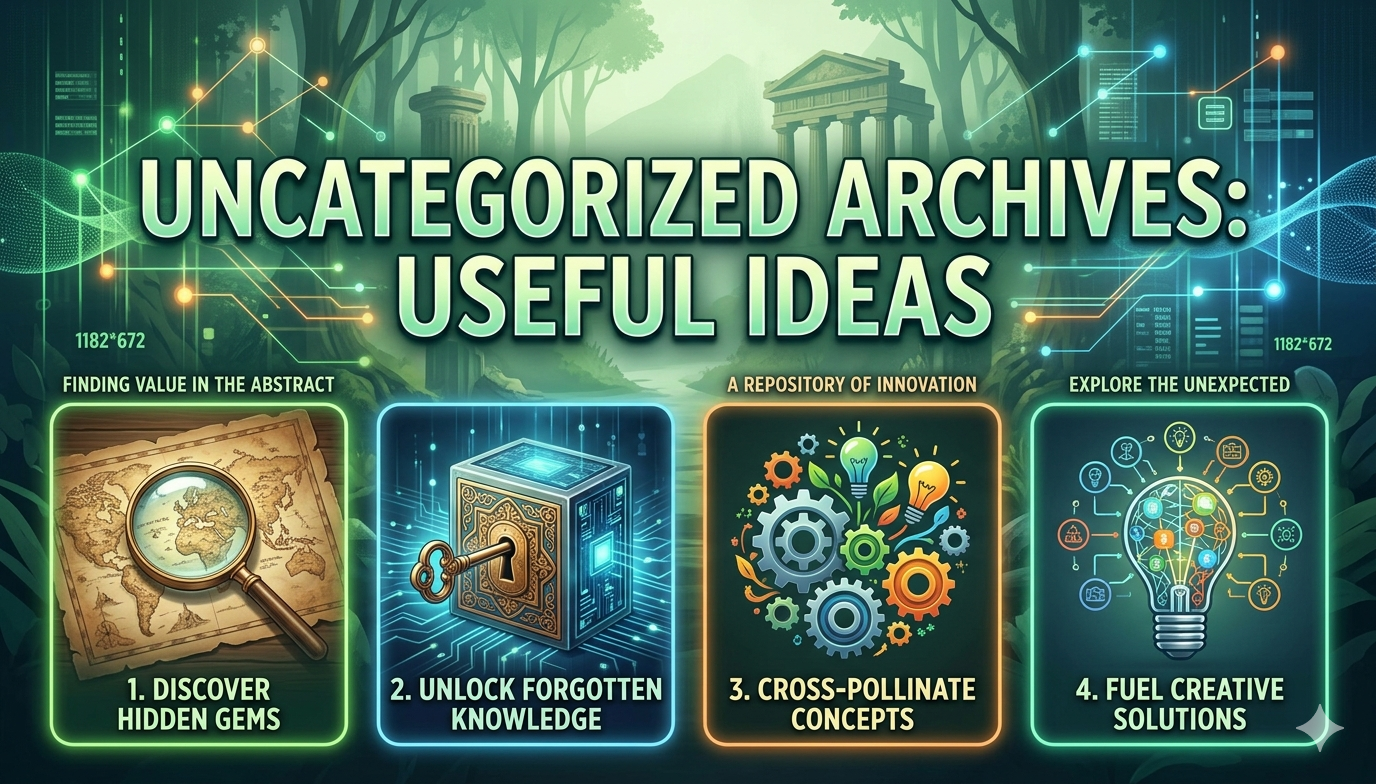
uncategorized archives usefulideas: Unlocking Knowledge Management for Innovation
uncategorized archives usefulideas, In today’s fast-paced corporate landscape, organizations are constantly seeking ways to enhance efficiency, innovation, and knowledge sharing. The modern workplace has evolved beyond traditional hierarchies and rigid communication structures. Today, knowledge management is not just an operational necessity but a strategic differentiator. Companies that successfully harness their collective intelligence and ensure the right information reaches the right people at the right time often outperform their competitors. Understanding how knowledge is captured, stored, and applied can dramatically improve decision-making, reduce redundancy, and foster innovation.
The Evolution of Knowledge Management
Knowledge management (KM) is the systematic process of capturing, distributing, and effectively using knowledge within an organization. Historically, KM was a reactive function, often limited to filing cabinets and internal memos. Over time, advancements in information technology and digital platforms have transformed KM into a proactive strategy that shapes business outcomes. The concept has evolved from simple record-keeping to a complex ecosystem that incorporates collaboration tools, databases, artificial intelligence, and social platforms to enhance organizational intelligence.
The emergence of digital tools has also facilitated the concept of the uncategorized archives usefulideas, enabling employees to store insights, reports, and best practices in a manner that is searchable, accessible, and actionable. By integrating digital archives into daily workflows, organizations create a knowledge reservoir that fuels innovation and informed decision-making.
Why Knowledge Management Matters
In the United States and globally, knowledge is considered one of the most critical assets of any organization. Effective KM provides several tangible benefits:
- Enhanced Decision-Making: By ensuring that accurate and relevant information is readily available, managers and employees can make well-informed decisions that reduce risks and optimize outcomes.
- Improved Collaboration: KM encourages cross-functional collaboration, breaking down silos and promoting knowledge sharing across departments.
- Innovation Acceleration: Access to accumulated knowledge, case studies, and creative solutions stimulates innovation and reduces time-to-market for new products and services.
- Operational Efficiency: Streamlined access to information reduces redundancies, eliminates repeated mistakes, and improves overall productivity.
- Employee Development: Knowledge repositories serve as learning platforms, helping employees acquire new skills and stay current in their fields.
Organizations that overlook KM risk stagnation, inefficiency, and missed opportunities. The integration of systems such as uncategorized archives usefulideas ensures that even informal, unstructured knowledge contributes to the organizational memory.
Digital Transformation and Knowledge Management
Digital transformation has reshaped how organizations manage knowledge. Modern enterprises are no longer dependent solely on traditional intranets or email communications for knowledge sharing. Cloud computing, AI-driven analytics, and collaboration platforms have transformed how information is stored, accessed, and applied.
For example, digital archives allow employees to categorize, tag, and annotate documents in ways that enhance discoverability. The concept of uncategorized archives usefulideas ensures that even ideas or insights that do not fit into conventional categories are preserved for future use. This approach acknowledges that creativity and innovation often emerge from the margins, where unconventional or unstructured knowledge resides.
Key Components of an Effective Knowledge Management Strategy
A successful KM strategy incorporates several core components:
1. Knowledge Capture
Capturing knowledge involves documenting tacit and explicit knowledge. Tacit knowledge includes personal know-how, skills, and experiences, while explicit knowledge comprises documented procedures, reports, and guides. Tools like digital notebooks, collaborative platforms, and video recordings help capture this knowledge effectively.
2. Knowledge Organization
Once knowledge is captured, it must be organized for easy retrieval. Traditional filing systems are often insufficient for the modern workplace. Digital archives, tagging systems, and semantic search capabilities are essential. The uncategorized archives usefulideas model highlights the importance of capturing insights that do not fit neatly into predefined categories, ensuring no valuable information is lost.
3. Knowledge Sharing
Sharing knowledge requires a cultural shift alongside technological solutions. Platforms such as enterprise social networks, forums, and collaborative tools enable employees to share insights in real time. Leadership plays a critical role in promoting a culture that rewards knowledge sharing and collaboration.
4. Knowledge Application
Knowledge management is only valuable when it informs decisions and actions. Organizations must integrate knowledge access into workflows, ensuring that employees can apply insights to their daily tasks. Decision-support systems, AI recommendations, and collaborative dashboards are key enablers.
Challenges in Implementing Knowledge Management
Despite the clear benefits, implementing KM presents challenges:
- Information Overload: Employees may struggle to find relevant knowledge amidst a flood of data. Proper curation and tagging are crucial to mitigate this issue.
- Cultural Resistance: Some employees may hoard knowledge as a form of job security, resisting collaborative practices.
- Technology Adoption: Integrating KM tools effectively requires training, leadership support, and alignment with business processes.
- Quality Control: Ensuring the accuracy, relevance, and currency of knowledge is essential to prevent misinformation or outdated practices from spreading.
Utilizing a framework like uncategorized archives usefulideas helps address these challenges by providing flexible, user-driven systems that capture knowledge in diverse formats and contexts.

Case Studies: Knowledge Management in Action
Several organizations have successfully leveraged KM strategies to improve performance:
Technology Sector
Leading tech companies in the United States have invested heavily in internal knowledge management platforms. By creating comprehensive digital repositories and encouraging knowledge sharing across teams, these companies have reduced development cycles and fostered a culture of innovation. Tools that implement uncategorized archives usefulideas principles allow engineers to store insights from side projects or informal brainstorming sessions, later applying them to larger initiatives. initial necklaces tell story usefulideas
Healthcare Industry
Hospitals and research institutions face complex knowledge challenges, from patient data to medical research findings. Effective KM strategies, supported by AI and cloud-based systems, allow healthcare providers to consolidate insights, improving treatment outcomes and research collaboration. The flexibility of uncategorized knowledge archives ensures that even experimental findings or anecdotal evidence are documented and retrievable.
Financial Services
Banks and financial institutions use knowledge management to enhance compliance, risk management, and client services. By maintaining a centralized repository of regulations, market analyses, and client feedback, institutions streamline decision-making. Incorporating uncategorized archives usefulideas allows compliance officers to track emerging trends and unusual cases, ensuring preparedness for unpredictable market developments.
The Role of Artificial Intelligence
Artificial intelligence has revolutionized KM by automating the categorization, retrieval, and application of knowledge. AI-powered search engines, natural language processing, and recommendation systems enhance the discoverability of insights. For instance, machine learning algorithms can identify patterns in uncategorized archives usefulideas, suggesting connections that might otherwise remain hidden.
AI also supports predictive analytics, helping organizations anticipate trends and proactively apply knowledge. As AI continues to evolve, its integration with knowledge management systems will further empower employees to leverage organizational intelligence effectively.
Knowledge Management and Organizational Culture
Technology alone cannot guarantee KM success. A culture that values knowledge sharing, continuous learning, and collaboration is essential. Leadership must model desired behaviors, incentivize contributions, and recognize knowledge champions. Initiatives such as mentorship programs, cross-functional projects, and open innovation challenges reinforce a knowledge-centric culture.
uncategorized archives usefulideas play a critical role in fostering inclusivity in knowledge management. By acknowledging insights that fall outside conventional categories, organizations empower employees to share creative, unconventional ideas without fear of rejection.
Measuring Knowledge Management Success
Assessing the impact of KM initiatives requires both qualitative and quantitative metrics. Common indicators include:
- Increased efficiency in project completion
- Improved decision-making quality
- Reduced redundancies and repeated errors
- Higher employee engagement and satisfaction
- Enhanced innovation and patent filings
Additionally, organizations can monitor the utilization of archives, including uncategorized archives usefulideas, to ensure that knowledge repositories are actively contributing to business outcomes.
Future Trends in Knowledge Management
The future of KM is closely tied to emerging technologies and evolving workplace dynamics. Key trends include:
- Integration with AI and Machine Learning: Greater automation in knowledge categorization, predictive analytics, and personalized recommendations.
- Enhanced Collaboration Tools: Virtual workspaces, immersive experiences, and real-time collaboration will redefine knowledge sharing.
- Focus on Unstructured Knowledge: Recognition of informal, tacit knowledge and the continued growth of uncategorized archives usefulideas.
- Knowledge Democratization: Making knowledge accessible to all employees, regardless of hierarchy, to foster innovation.
- Data Privacy and Security: Ensuring that sensitive knowledge is protected while remaining accessible to authorized personnel.
Organizations that embrace these trends will be better positioned to leverage knowledge as a strategic asset in an increasingly competitive environment.
Practical Steps to Implement Effective KM
To build a successful KM strategy, organizations can follow these steps:
- Assess Knowledge Needs: Identify critical knowledge gaps, key information sources, and areas of high impact.
- Choose Appropriate Tools: Select platforms and software that align with organizational workflows and culture.
- Encourage Participation: Promote a culture of sharing and collaboration through incentives, recognition, and leadership engagement.
- Capture and Organize Knowledge: Use structured and unstructured archives, including uncategorized archives usefulideas, to store information effectively.
- Ensure Accessibility: Design systems that make knowledge easily retrievable and actionable for employees.
- Evaluate and Refine: Continuously monitor KM effectiveness, gather feedback, and make improvements to maintain relevance and usability.

Conclusion
Knowledge management is no longer a secondary function but a strategic imperative. The integration of digital archives, AI, and collaborative platforms has transformed how organizations capture, share, and apply knowledge. By embracing uncategorized archives usefulideas, organizations can harness unconventional insights, fostering innovation and informed decision-making.
In the United States and beyond, companies that effectively manage knowledge gain a competitive edge, enhancing efficiency, collaboration, and employee development. The future of KM will continue to evolve, driven by technology, culture, and the recognition that knowledge—whether structured or uncategorized—is a vital asset in achieving long-term success.
By embedding KM practices into daily operations, organizations ensure that knowledge flows seamlessly, decisions are informed, and innovation thrives. The strategic value of knowledge management cannot be overstated, and its impact resonates across industries, from technology and healthcare to finance and beyond. Ultimately, the organizations that master knowledge management will not only survive but thrive in the modern, knowledge-driven economy.
uncategorized archives usefulideas is not just a tool; it is a philosophy that recognizes the importance of preserving and utilizing knowledge in all its forms, ensuring that every idea—structured or not—contributes to the collective intelligence of the organization.